
Getting found on Google Maps in 2026 requires optimizing your Google Business Profile with complete information and maintaining consistent contact details across all online directories. Effective local SEO for small business also involves building geo-targeted website content and actively collecting customer reviews to increase visibility in the local 3-pack.
You work hard to build a local reputation, yet your storefront remains invisible to the neighbors searching for your services right now. It is frustrating to watch national competitors dominate the local search results while your superior expertise stays buried on page two. In 2026, proximity alone is not enough to secure a spot in the coveted Google 3-Pack; you must demonstrate authority and relevance at a granular level. As search becomes increasingly driven by AI overviews and nuanced local signals, your digital presence must be as durable as your physical one. This guide provides a practical roadmap to mastering local SEO. You will learn how to optimize your Google Business Profile, leverage AI discovery tools, and build a location-first content strategy. We will also cover the mechanics of local citations and review management to ensure your business becomes the definitive choice for your community.
Understanding the Google 3-Pack and Why It Matters in 2026
The Google 3-Pack is the most coveted real estate in digital marketing. It refers to the trio of business listings that appear at the top of a search results page, accompanied by an interactive map. By 2026, its role has evolved beyond a simple directory. It now serves as the primary data source for Google’s AI Overviews, which synthesize these top results into direct recommendations. If your business is not in this pack, you are largely invisible to the AI-driven answers that now dominate mobile search.
Local search behavior is characterized by high intent and immediate action. Research shows that 88% of local mobile searches result in a store visit or a phone call within 24 hours. For service based businesses operating in Vancouver, capturing this intent requires a specialized approach. Traditional organic SEO focuses on ranking blue links for global or national queries, but local SEO for small business focuses on winning the map. In many cases, securing a spot in the 3-Pack provides significantly higher conversion rates than holding the first spot in traditional organic results.
The reason is simple: proximity and trust are prioritized. When a user searches for a service, Google prioritizes the Map Pack because it provides immediate access to reviews, directions, and contact information. At V2 - Durable Customer Success, we help clients navigate these nuances through personalized customer success support, ensuring your digital presence is optimized for how people actually search today. While organic ranking still matters, the Map Pack is where the local revenue is won or lost in 2026.
The Core Foundations: Proximity, Relevance, and Prominence
To understand why one Vancouver business ranks over another, you must grasp the three pillars of Google’s local algorithm: proximity, relevance, and prominence.
Proximity measures the physical distance between the searcher and your business address. It remains a primary factor for "near me" queries. While you cannot change your storefront's physical location, you can optimize for this intent by ensuring your service area is precisely defined in your Google Business Profile (GBP) and matches the technical metadata on your site.
Relevance determines how well your business matches a specific search query. In 2026, simply listing a broad industry is insufficient. You must select specific primary and secondary categories that align exactly with your offerings. We often help clients refine their Durable AI SEO settings to ensure that every niche service, from "heritage home restoration" to "modern kitchen tiling," is indexed correctly for maximum relevance.
Prominence reflects your business's reputation and authority across the web. This is calculated through review volume, backlink quality, and consistent directory mentions. While proximity is often a fixed constraint based on the user's location, relevance and prominence are the variables where you can actually win. Mastering these two pillars allows a specialized shop to outrank a closer competitor by proving to Google that they are the more authoritative choice. This strategic focus is the cornerstone of effective local SEO for small business owners who want to outmaneuver larger, less agile neighbors.
Step by Step Guide to Google Business Profile Optimization
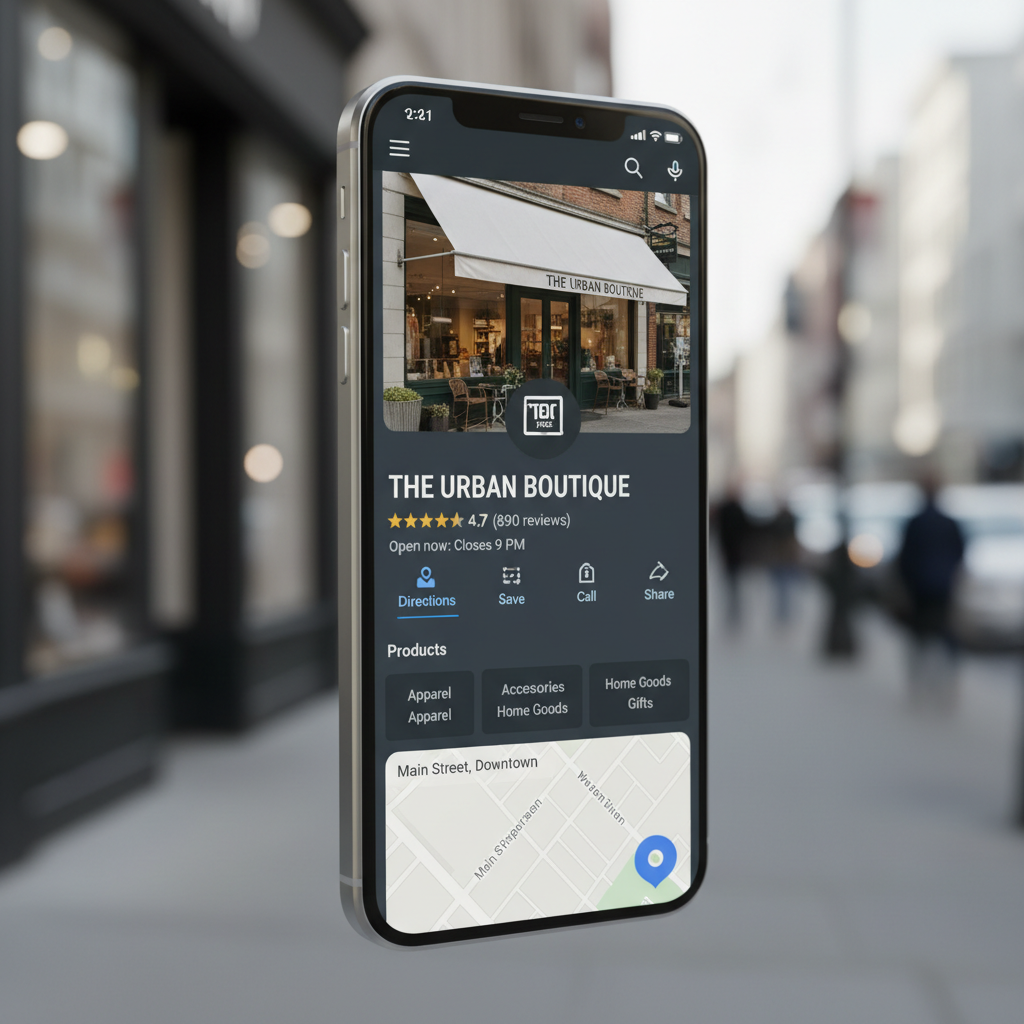
Optimizing your Google Business Profile (GBP) in 2026 requires moving beyond basic data entry to a strategy focused on data density. The primary category you select remains the most powerful relevance signal for local SEO for small business. If your primary category is too broad, like "Contractor," you are competing against everyone from roofers to painters. Instead, choose the most specific primary category available, such as "Kitchen Remodeler," and use secondary categories to capture related searches like "Countertop Store" or "General Contractor." This hierarchy tells Google exactly which high-intent queries your business should satisfy.
Business naming is another critical lever. Insights from local SEO communities on Reddit suggest that profiles including a core service and a city name often see a visibility boost. However, you must avoid aggressive keyword stuffing. If your legal name is "Westside Builders," adding "Vancouver General Contractor" to your profile might help, but adding a string of ten keywords will likely trigger a manual review or suspension. Ensure your GBP name closely aligns with your signage and legal documentation to maintain trust with Google's verification systems.
One of the most underutilized tools for ranking in 2026 is the Q&A section. Do not wait for customers to ask questions. Instead, proactively post your own frequently asked questions and provide detailed, authoritative answers. Use this space to address common local concerns, such as "Do you provide on-site estimates in North Vancouver?" or "What is your typical turnaround time for emergency plumbing in Gastown?" By answering these yourself, you provide the natural language data that Google’s AI Overviews use to formulate recommendations.
Finally, ensure your service area is meticulously defined. Rather than selecting a broad radius, list specific neighborhoods and postal codes. This granular data helps the algorithm understand your physical reach across the Lower Mainland. For more technical assistance with syncing your profile data to your website, you can contact our Vancouver team to ensure your digital footprint is cohesive and authoritative.
Building a Location-First Content Strategy for Your Durable Website

While a Google Business Profile acts as your digital storefront, your website provides the necessary proof to validate those claims. In 2026, Google’s algorithm seeks consistency between your map listing and your site content to confirm your service area. This is where your Durable website becomes a strategic asset for local SEO for small business. You must move beyond generic service descriptions and implement a geo-modified content strategy that signals your authority within specific Vancouver communities.
Start by creating dedicated pages for your primary services that reference specific neighborhoods. Rather than a single service page for all of Vancouver, refine your content to mention areas like Kitsilano, Gastown, or Mount Pleasant. For instance, if you operate a landscaping business, a page titled "Residential Garden Design in the West End" provides more relevance than a broad "Landscaping" header. This localized language helps Google’s AI crawlers associate your brand with high-intent searches in those specific zones.
Technically, your Durable site needs several key markers to rank effectively:
Google Map Embed: Place an interactive Google Map on your contact page that points directly to your verified business location. This creates a hard-coded link between your site and your profile.
Local Schema Markup: Use technical metadata to tell search engines your exact latitude, longitude, and business hours. We often help clients configure their Durable AI SEO settings to ensure this structured data is correctly implemented.
NAP Matching: Ensure your Name, Address, and Phone number are formatted identically to your Google Business Profile, preferably in the site footer.
By layering these neighborhood-specific details over Durable’s AI-generated structures, you provide the "digital proof" required to win the 3-Pack. For assistance with these technical configurations, you can contact our Vancouver team to ensure your site is fully optimized for the local market.
The Impact of AI Overviews on Local Business Discovery
This synergy between your website and your profile is exactly what fuels Google’s AI Overviews in 2026. Local search has shifted from simple indexing to active discovery, where AI synthesizes data from GBP attributes and customer reviews to answer conversational "Who is the best..." queries. When a user asks for the most reliable renovation contractor in North Vancouver, the AI isn't just looking for keywords; it is seeking semantic proof within your digital footprint.
To thrive, you must adopt natural language across your entire profile. Your business description should avoid rigid lists and instead use narrative structures that describe your unique value. We often help clients calibrate their Durable AI SEO settings to ensure their site copy aligns with these AI requirements. Additionally, encourage reviewers to include specific details, such as the exact service provided and the neighborhood served. A review mentioning "expert kitchen tiling in Yaletown" provides the high-quality data the AI needs to recommend your business as the definitive local authority.
Winning the Review Game: Authentic Feedback and Local Authority

In 2026, reviews are no longer just social proof; they are high-density data packets that feed Google’s ranking engine. To master local SEO for small business, you must focus on review velocity and diversity. A steady stream of recent feedback signals to Google that your Vancouver business is active and reliable. If you have not received a review in months, your prominence score will stall. Diversity is equally critical. While Google Business Profile is the priority, maintaining a presence on platforms like Yelp or industry-specific sites like Houzz provides the cross-platform validation AI Overviews require to confirm your authority.
Engagement has become a non-negotiable ranking signal. Responding to every review, both positive and negative, demonstrates business responsiveness to the algorithm. For Durable users, we recommend implementing a referral and review workflow immediately after project completion. Use your Durable AI SEO settings to ensure your automated follow-ups include a direct link to your GBP. By triggering this request within 24 hours of service, you capture feedback while the experience is fresh, ensuring a consistent velocity that keeps you ahead of competitors.
Mastering Local Citations and NAP Consistency Across the Web
A local citation is any online mention of your business's Name, Address, and Phone number, commonly known as NAP. These mentions act as a digital paper trail that validates your physical existence to search engines. For local SEO for small business, the absolute rule is NAP consistency. Minor discrepancies, such as using "Street" on your website but "St." on a directory, can confuse the algorithm and diminish your ranking power. Google interprets these inconsistencies as a lack of data reliability, which can push you out of the 3-Pack in favor of a competitor with cleaner data.
To build a robust citation profile in the Canadian market, focus on high authority directories that search engines trust as primary data sources. We recommend prioritizing these specific platforms:
Yellow Pages Canada
Yelp
Local Chamber of Commerce sites (such as the Greater Vancouver Board of Trade)
Industry specific associations
By 2026, social media profiles have also become vital local signals. Your Instagram, Facebook, and LinkedIn profiles provide real time location data that Google’s AI uses to cross reference your service area. If you find managing these across various platforms overwhelming, you can contact our Vancouver team to help align your digital footprint. Ensuring your NAP data is uniform across every directory and social platform creates a cohesive identity that search engines can trust, ultimately reinforcing the technical foundations set within your Durable AI SEO settings.
Mastering local SEO in 2026 requires a consistent balance of technical accuracy and genuine customer engagement. By focusing on your Google Maps visibility now, you create a reliable path for new clients to find your business. If you want expert help navigating these evolving search trends, V2 is ready to support your goals. You can learn more about our approach to see how we help small businesses thrive; we focus on building durable systems that ensure your brand remains visible and competitive.